
Event vendors in Kitsap County live in a rhythm shaped by seasons. Some months explode with bookings and sales. Others slow down and make business owners nervous.
The biggest separator between vendors who stay fully booked and those who constantly hunt for clients is how well they use the Seasonal Engagement Activation Curve.
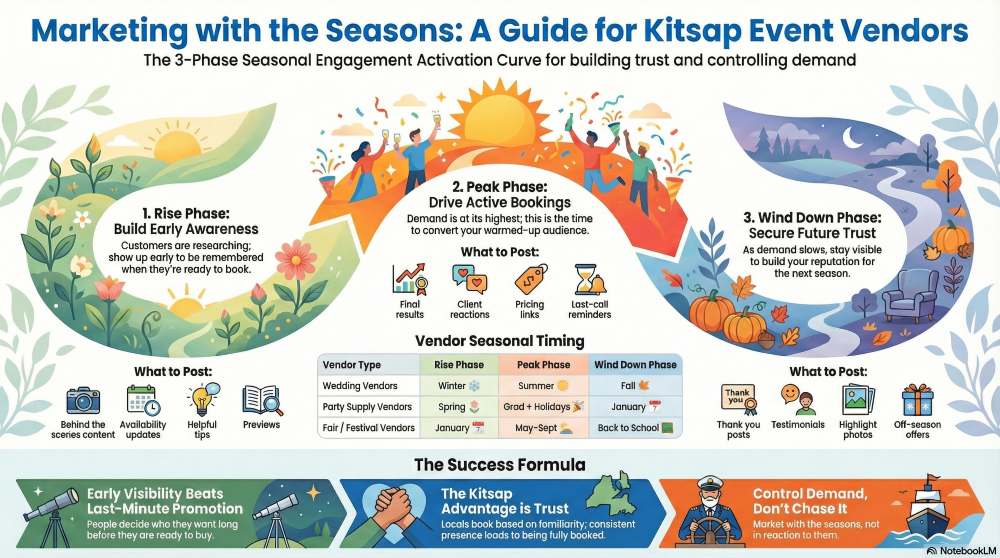
This curve has three phases that determine success: the rise, the peak, and the wind down. Vendors who understand when their audience starts thinking, planning, booking, and spending stay ahead of the competition.
Every year, vendors feel the results of this curve whether they recognize it or not. Some vendors struggle during the slow months because they wait too long to promote themselves.
Others enjoy steady demand because they start warming up their audience before big seasons arrive. It is not luck. It is timing.
This article explains exactly how event vendors, from wedding planners to holiday decorators to festival caterers, can use this curve to turn seasonal behavior into year round success.
Why the Rise Phase Matters the Most
The rise phase is the most powerful part of the curve, and yet it is the most ignored. This period begins when people first start thinking about hosting events, planning celebrations, and looking for service options.
They are not ready to buy yet. They are casually searching Pinterest. Watching TikToks. Browsing venue tags. Saving ideas. Asking around. This is the moment when future clients silently choose who they want to keep an eye on.
Kitsap vendors who promote early during this phase earn trust before the competition wakes up. For example, brides planning summer weddings in Port Gamble, Gig Harbor, or Poulsbo usually start inquiry research during winter. Photographers who wait until June to promote are already behind.
Bakers for graduation parties can benefit from showing designs as early as spring. Santa and holiday themed decorators perform best when they tease availability in August instead of November.
It is not about selling early. It is about making sure your future customers already know your name before their buying window begins.
Retail stores feel this pattern too. Boutiques, craft shops, balloon stores, florists, and gift shops notice visitors browsing long before they make purchases. A store that posts seasonal items early becomes the store that locals return to when spending begins.
What Happens During the Peak Phase
The peak phase is when demand hits its highest point. This is when vendors everywhere start posting heavily. Ads everywhere. Flyers everywhere.
Weekend event calendars packed. Markets and fairs live every few days. People buying and booking nonstop. At this stage, competition becomes loud and busy.
The vendors who prepared during the rise now convert traffic into bookings with ease. They already warmed up their audience. Customers recognize their brand. They remember seeing their posts earlier. They feel trust. They choose you faster, and often without much price negotiation.
If a business waits until this phase to start promoting, it becomes harder. Last minute marketing forces discounts. It creates rushed messaging and pushes vendors into the busiest season with weak visibility.
Even skilled vendors lose customers simply because they did not build momentum early enough.
Retail businesses also thrive during the peak if they prepared correctly. Stores that already posted inventory previews, themed displays, and stocking updates during the rise do not need aggressive sales tactics during the rush. People show up ready to buy.
The Wind Down Phase Builds Next Season
The wind down phase begins when demand starts decreasing. This is when many vendors stop posting because they feel tired. Events are slowing. Holidays are over. Website inquiries decrease.
This silence becomes a problem when the next season arrives, and they have to start from zero.
The vendors who continue posting during the wind down benefit from something very rare in business. They remain visible when competition becomes quiet. This visibility builds authority.
It captures reviews. It reminds past clients to refer their friends. It shows involvement in the community. It creates emotional connection without promotional pressure.
Retail shops can use this same moment to shift their messaging from selling to storytelling. Sharing what sold well, what customers loved, or what new things will arrive next season keeps interest alive.
When you stay visible during the wind down phase, the next rise arrives with momentum rather than panic.
How Seasonal Cycles Change by Industry
Every type of event vendor has a different yearly rhythm. This is why a single calendar does not work for everyone. You must understand your audience and how far in advance they make decisions.
Wedding vendors in Kitsap rise in late winter, peak in summer, and wind down in fall.
Party supply vendors rise late spring, peak during graduations and holidays, and wind down in mid January.
Community fair vendors rise right after New Year, peak May through September, and wind down when school starts.
Halloween vendors rise in August, peak late October, and wind down quickly in the first week of November.
Holiday decorators rise early fall, peak November to mid December, and wind down the last week of December.
Retail businesses follow similar seasonal waves. The key is mapping your exact rhythm so you know when attention begins rather than when demand begins.
What To Post During Each Phase
Here is a simple and practical breakdown so that every vendor can take action immediately.
Rise phase
Start showing availability
Post behind the scenes preparations
Share early concept boards and mood boards
Show before and after photos
Share tips that help event planners feel confident
Preview upcoming seasonal offers
This is the moment to be memorable, not sales focused
Peak phase
Share customer reactions and event outcomes
Highlight themed packages and last call reminders
Collaborate with venues and other local vendors
Add pricing links and booking links to posts
Promote remaining availability dates clearly
This is the moment to turn attention into revenue
Wind down phase
Share thank you posts to customers
Show highlight photos from the season
Post testimonials and ask for Google reviews
Promote off season pricing or weekday discounts
Talk about upcoming seasonal ideas
This is the moment to stay relevant without pressure
How Kitsap Customers Choose Vendors
Locals prefer businesses that feel present, engaged, and authentic. Kitsap is a tight knit place where trust comes from familiarity. If someone sees your work consistently throughout the year, they do not feel nervous about booking you. You already feel like part of their story.
Locals also love vendors who support other vendors. Collaborations win the community. Tagging venues, photographers, caterers, DJs, and bakers creates recognition. You grow together instead of alone.
Retail stores and event vendors can cross promote each other since both serve the same seasonal patterns. For example, a balloon vendor can collaborate with a gift shop in Silverdale.
A wedding planner can work with a florist in Poulsbo. A graduation cake maker can feature tux rental shops in Bremerton. Collaboration fits right into the rise phase and builds interest without ads.
The Real Advantage of Riding the Curve
Small consistent action during the early rise gives the biggest long term advantage. You do not need to spend huge amounts on ads. You do not need to run constant discounts. You do not need to fight for attention during the peak.
Instead of chasing bookings, bookings come to you because:
People already know you
People already trust you
People already remember you
This is the true power of the Seasonal Engagement Activation Curve. It turns business planning into a predictable cycle. It removes uncertainty. It reduces stress. It makes every year better than the last.
Final Takeaway for Every Kitsap Event Vendor
The vendors who win in Kitsap County are not always the cheapest or the most experienced. They are the most visible at the right time of year.
They show up during the rise, convert during the peak, and stay connected during the wind down. They do not disappear. They stay a familiar and trusted name in the community.
If you learn your seasonal rhythm and plan your marketing around it, you never start from zero again. Your next busy season begins long before it actually starts.
Your audience will already be watching. Your next customer may be looking at your page today without sending a message yet. If you stay in front of them, you will be the vendor they choose when the moment to book arrives.