
Every year, communities move through waves of excitement. Holidays, festivals, parades, summer markets, fall carnivals, school openings, spring cleanups, and winter celebrations fill the calendar. Yet only a small number of local businesses rise with the energy of these seasons. Most stay quiet and invisible. That is why I created the Seasonal Engagement Activation Curve. This framework explains how customer attention rises and falls during seasonal events and how small businesses can position themselves to be the most visible at exactly the right moment.
What Is the Seasonal Engagement Activation Curve
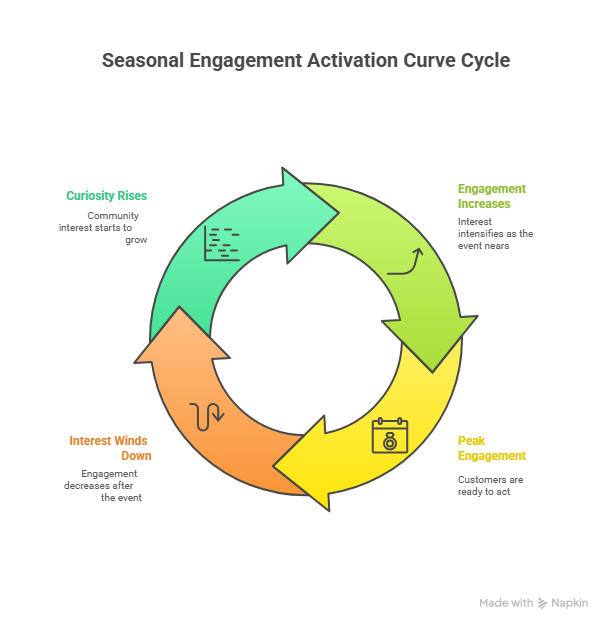
The Seasonal Engagement Activation Curve is a simple pattern that maps how community interest grows, peaks, and drops around seasonal events. Every event creates a rising line of curiosity. As the event gets closer, engagement increases. At the peak, customers are ready to buy, book, support, and participate. After the event ends, interest slowly winds down. This curve shows when small businesses must appear, speak, promote, and participate to attract maximum attention.
Why This Curve Exists
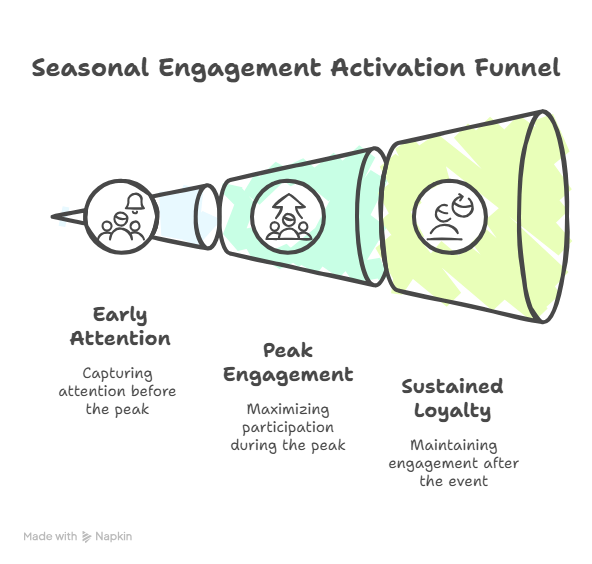
Communities behave in cycles. A seasonal event announces itself. People talk about it. Search for it. Ask friends about plans. Plan purchases. Share posts. Repost announcements. These moments of rising attention create the very pattern the Seasonal Engagement Activation Curve explains. When businesses participate early in the curve, they become visible before others. When they appear at the peak, they get the highest conversion. When they stay active after the event, they gain long-term loyalty. This curve shows why timing matters more than the promotion itself.
The Three Phases of the Seasonal Engagement Activation Curve
The curve is made of three clear phases. Each phase gives small businesses a chance to participate in ways that feel natural and effective.
Phase One: The Rise
This is when people begin noticing the event. Early announcements appear online. Community pages talk about it. Families discuss plans. Businesses that step in here earn the earliest attention. Posting a small preview, offering a prep discount, or creating a themed teaser makes people associate your brand with the event before the excitement peaks.
Phase Two: The Peak
This is the highest point of the curve. Excitement and participation reach their strongest level. People search online for where to go, what to buy, and which local businesses are offering deals. This is the time for clear offers, themed promotions, giveaways, seasonal bundles, event partnerships, or a presence at the event itself. Any business that activates here uses the power of the Seasonal Engagement Activation Curve to turn community enthusiasm into real customer action.
Phase Three: The Wind Down
The event ends but attention does not drop instantly. People share photos. They post stories. They talk about their experience. They thank businesses that participated. This is the moment for follow-up offers, recap posts, gratitude messages, and limited-time after-event deals. Businesses that remain active through this phase stay in the customer’s mind long after the season closes.
How Small Businesses Can Apply the Seasonal Engagement Activation Curve
The curve gives a clear path for participation. Here are simple ways a small business can use it.
Show up early by acknowledging the event before others. Use social posts, window signs, or themed decorations.
Offer a rising-phase special that connects your business to the event.
Stay visible at the peak by sharing strong visuals, promotions, collaborations, bundles, or live event updates.
Make engagement easy. Add QR codes. Create a simple booking link. Offer a limited preorder.
Use the wind down to build new relationships. Post thank you notes. Share memories. Give follow-up discounts. Ask for reviews.
The Seasonal Engagement Activation Curve makes it clear that participation is not about doing more. It is about timing actions when people are paying the most attention.
Why Many Small Businesses Miss These Opportunities
Most businesses treat seasonal events as last-minute promotions. They post once. They discount randomly. They join too late or skip entirely. Without understanding the Seasonal Engagement Activation Curve, they miss the rise phase where awareness builds, and they miss the wind down where loyalty grows. They appear only at the peak when competition is highest. The curve changes this. It gives a simple structure that helps owners understand where they stand and where they must act.
Examples of How This Curve Works in Real Life
A café that introduces a themed drink a week before the event gains early visibility.
A boutique that shares a simple “coming soon” post catches attention before peak search activity.
A gym that posts a recap and a thank you offer after a community run stays in the customer’s mind longer.
A family business showing behind-the-scenes preparation builds anticipation.
A bakery offering a small limited batch early in the rise phase creates demand before the event even starts.
These moves follow the Seasonal Engagement Activation Curve without effort. They feel natural and match how people behave around events.
Why This Curve Works for Every Type of Small Business
The Seasonal Engagement Activation Curve applies to retail, restaurants, salons, service providers, repair professionals, fitness centers, artists, photographers, home-based businesses, and even local nonprofits. Every seasonal event brings a predictable wave of attention. A clear understanding of the curve helps any business catch that wave.
How the Curve Helps Small Businesses Stand Out
When a business uses the curve, it becomes part of the event itself. People remember it. They talk about it. They repost it. They see it as a contributor rather than an observer. Being part of the cultural rhythm of the community builds trust, visibility, and long-term customer relationships. The curve gives owners a strategy for showing up at the right moment, not the crowded moment.
Looking Ahead With the Seasonal Engagement Activation Curve
Event seasons will keep coming. Spring, summer, fall, winter. Parades, celebrations, school events, community gatherings. Each season brings a new curve. Small businesses that understand the Seasonal Engagement Activation Curve will always be ready. They will know when to activate, when to peak, and when to connect after the event ends. This steady pattern turns unpredictable seasonal rushes into controlled opportunities for growth.
Why This Concept Matters Now
Communities are changing fast. Attention is shorter. Competition is louder. Events are becoming the strongest connection points between businesses and customers. The Seasonal Engagement Activation Curve is a way for small businesses to stay visible, stay relevant, and stay active during the most important moments of the year.